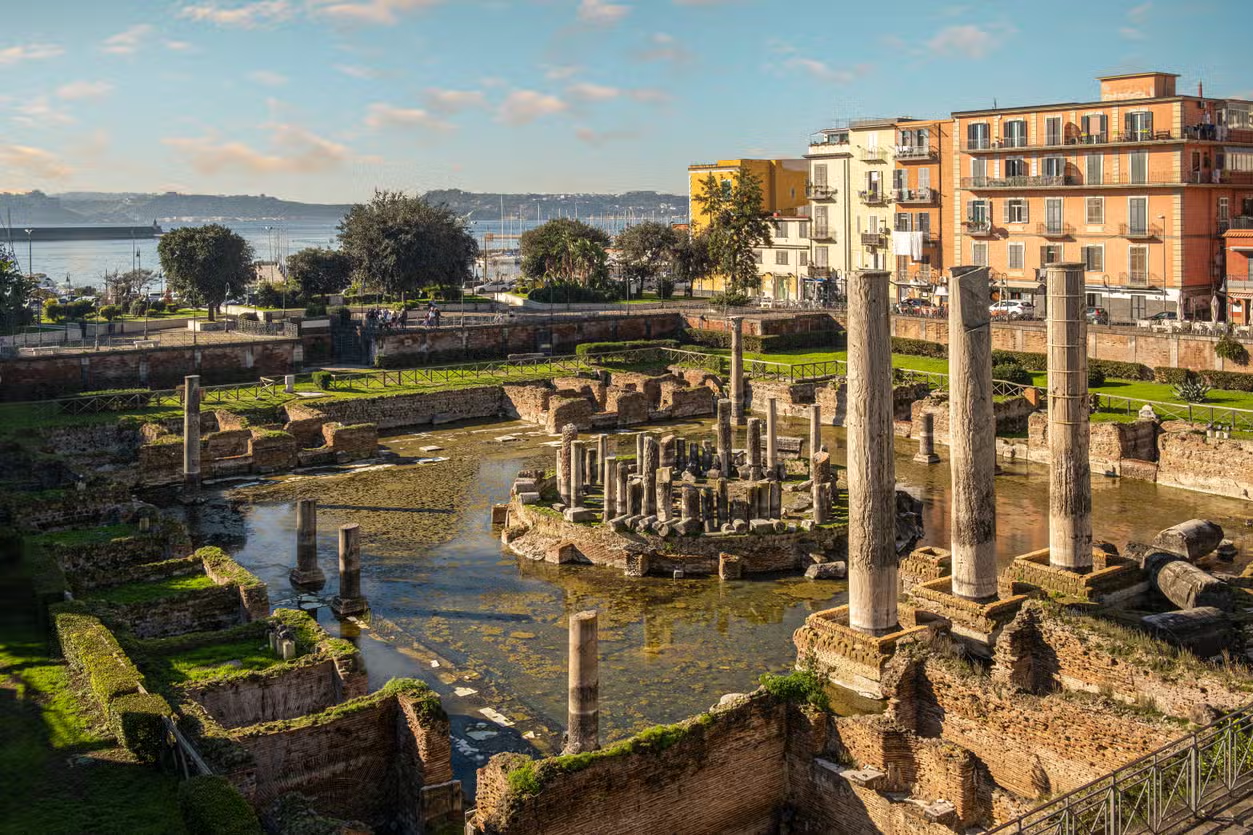
The ancient public market. It is the global symbol of bradyseism: the holes made by lithodomes (marine mollusks) on the columns indicate the sea level reached over the centuries.
The Macellum in Pozzuoli is mistakenly known as the "Temple of Serapis" due to the discovery of a statue of the Egyptian deity during initial excavations. In reality, it is the city's ancient public market, one of the largest and best preserved in the Roman Empire. The structure consists of a square courtyard surrounded by porticoes onto which shops (tabernae) opened. At the center stands a circular hall (tholos) surrounded by marble columns.
Beyond its archaeological value, the Macellum is a thermometer of global bradyseism. The three large cipollino marble columns feature, approximately halfway up, a band of holes made by lithodomes (marine mollusks). This indicates that for centuries the monument remained submerged by seawater due to the subsidence of the ground, only to re-emerge with the rising of the land. It is a unique site where geology and archaeology merge, telling the story of an unstable yet vibrant territory. Its architectural elegance reflects the cosmopolitanism of Pozzuoli, where goods from all over the known world were exchanged under the gaze of Eastern and Roman deities.