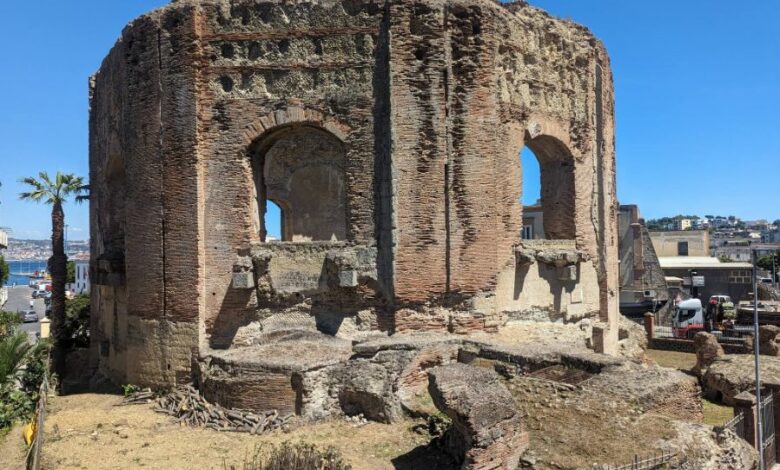
Another majestic octagonal bathhouse overlooking the harbor. From the outside, it appears like a romantic ruin; inside, it displays the double-shell construction technique typical of large Roman bathhouses.
Located directly opposite the current port of Baiae, the Temple of Venus is the building that more than any other defines the coastal archaeological skyline of the area. Here too, the term "temple" is a scholarly legacy from the 18th century; the structure was actually a monumental octagonal bathhouse, featuring a spectacularly large dome (about 26 meters in diameter). From the outside, the building displays the typical Roman brick structure, laid with millimetric precision, with large arched windows that allowed natural lighting and the escape of steam.
What makes the Temple of Venus unique is its internal "double shell" architecture, a technique that ensured superior thermal insulation and structural stability, allowing the building to withstand earthquakes and bradyseismic phenomena for two thousand years. Its proximity to the sea is no coincidence: thermal baths of this type often used seawater or were built over hot springs that flowed directly from the seabed. The dedication to Venus is not entirely unfounded from a symbolic perspective: Venus was the protector of Baia, the goddess of beauty, love, and water, and the magnificence of this room seemed almost an offering to the goddess herself. Today, the temple stands in an area partially flooded by rainwater and rising water, creating a mirrored effect that visually doubles its height, making it one of the most photographed sites in the Phlegraean Fields.