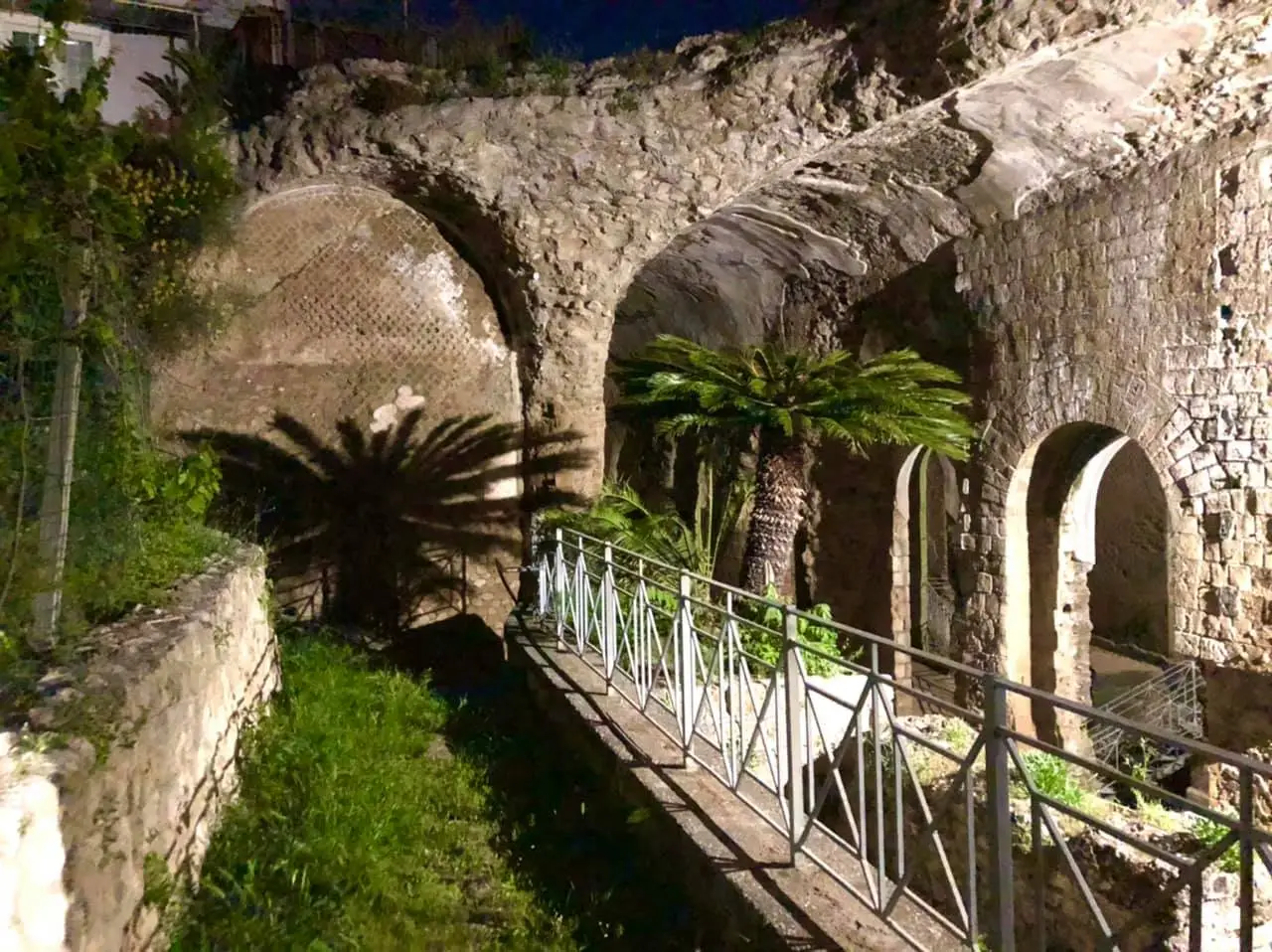
An incredible system of superimposed cisterns. The upper section dates back to the Imperial period, while the lower (older) section is a maze of corridors carved into the tuff rock that likely served a Republican-era villa (perhaps that of Hortensius Hortalus).
The Cento Camerelle represent one of Bacoli's most fascinating architectural mysteries. Situated on a promontory overlooking the sea towards the island of Procida, these structures are actually a complex system of water cisterns arranged on two chronologically different levels. The upper level dates back to the Imperial period (1st century AD) and is composed of a series of parallel vaulted rooms, built to collect rainwater for the operation of a vast villa above, traditionally attributed to Quintus Hortensius Hortalus and later acquired by the Imperial family.
The true marvel, however, lies in the lower level, dating back to the Republican era. Here we enter a veritable labyrinth carved directly into the tuff rock. It consists of a series of narrow, high corridors, arranged in a grid, which served as a monumental water reserve. Walking through these tunnels, illuminated by light wells descending from above, is an almost claustrophobic yet extremely evocative experience. The name "Cento Camerelle" (One Hundred Chambers) derives from the popular belief that these were places where slaves were held, but technical analysis confirms their hydraulic function. The efficiency of this system was such that it could guarantee water autonomy to one of the most luxurious residences of antiquity for months at a time. The site also offers a panoramic terrace that allows you to see the submerged outlines of other Roman structures along the coast, highlighting once again how the sea has reclaimed much of ancient Bacoli.