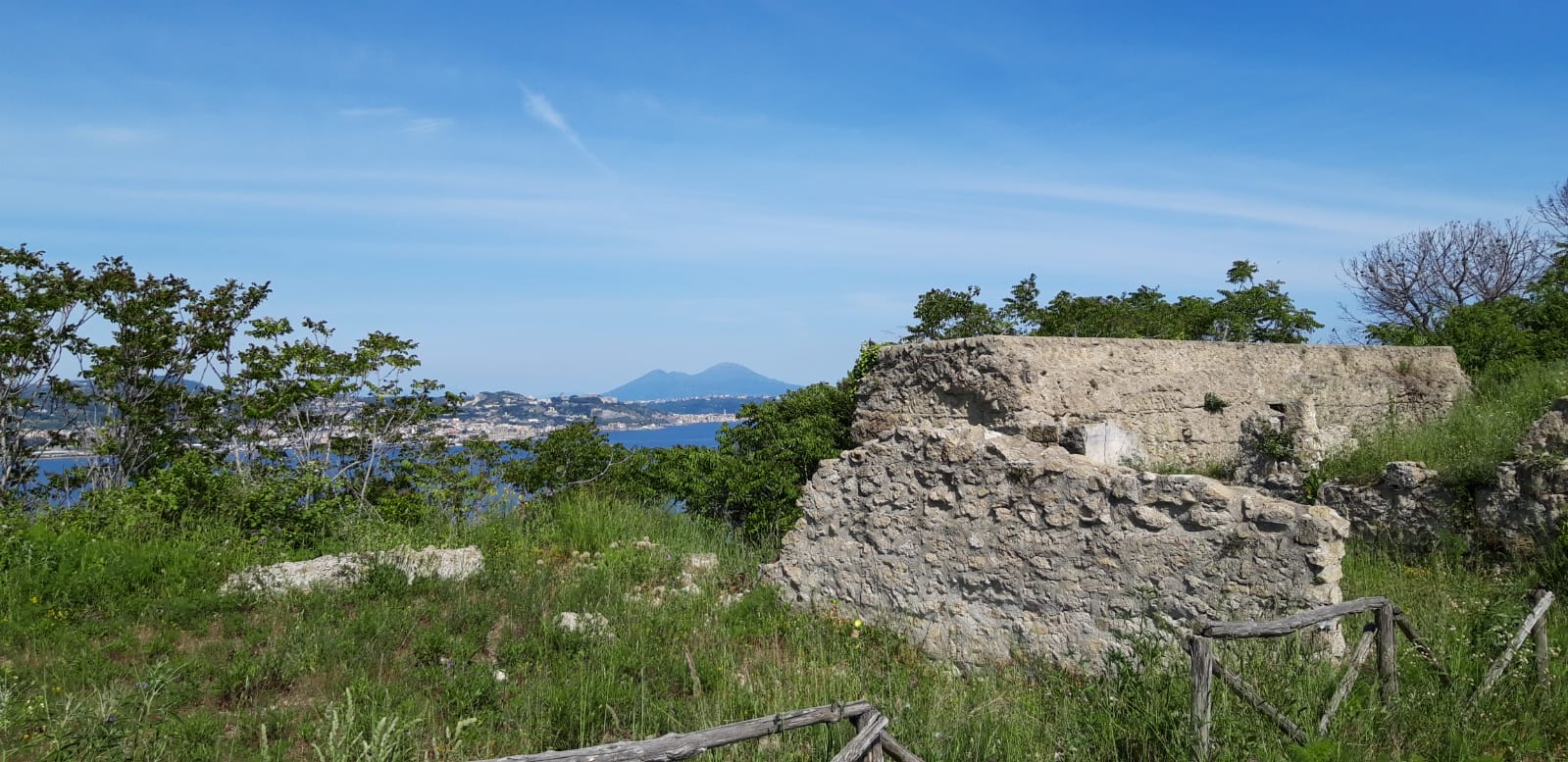
Less well-known than the previous ones, this park offers a stroll among the Roman residential structures that overlooked the bay. Here, one can perceive the urban layout of the seaside villas of leisure.
The Monumental Park of Baia represents a crucial section, albeit less frequented by mass tourism, of the imperial residential complex that once covered the entire hill of Baia. While the Archaeological Park of the Baths represents the public and representative hub of the Palatium, the Monumental Park offers a privileged glimpse of the high-ranking residential structures that enjoyed an unparalleled panoramic view of the gulf. This site is crucial for understanding the terraced urban planning typical of the area: the Romans, lacking large flat spaces, shaped the hillside by creating artificial platforms supported by imposing walls in opus reticulatum.
Walking through the park, one immediately senses the fusion between architecture and the natural landscape. The structures present here were an integral part of a villa that likely served as an outbuilding for the emperor's guests or the court's high-ranking entourage. Remains of colonnades can be seen that once supported pergolas, designed to offer shade and refreshment during the hot Phlegraean summers. The current vegetation, consisting of Mediterranean scrub, holm oaks, and olive trees, frames the ruins, creating an 18th-century Grand Tour atmosphere. One of the most interesting features is the water channeling system: since Baiae was an area lacking in natural freshwater springs but rich in thermal waters, the Romans designed complex systems of cisterns and aqueducts to separate drinking water from that intended for hot baths. The Monumental Park is the ideal place to reflect on ancient "villeggiatura," understood not only as a form of relaxation, but as a display of power through radically altering the landscape.