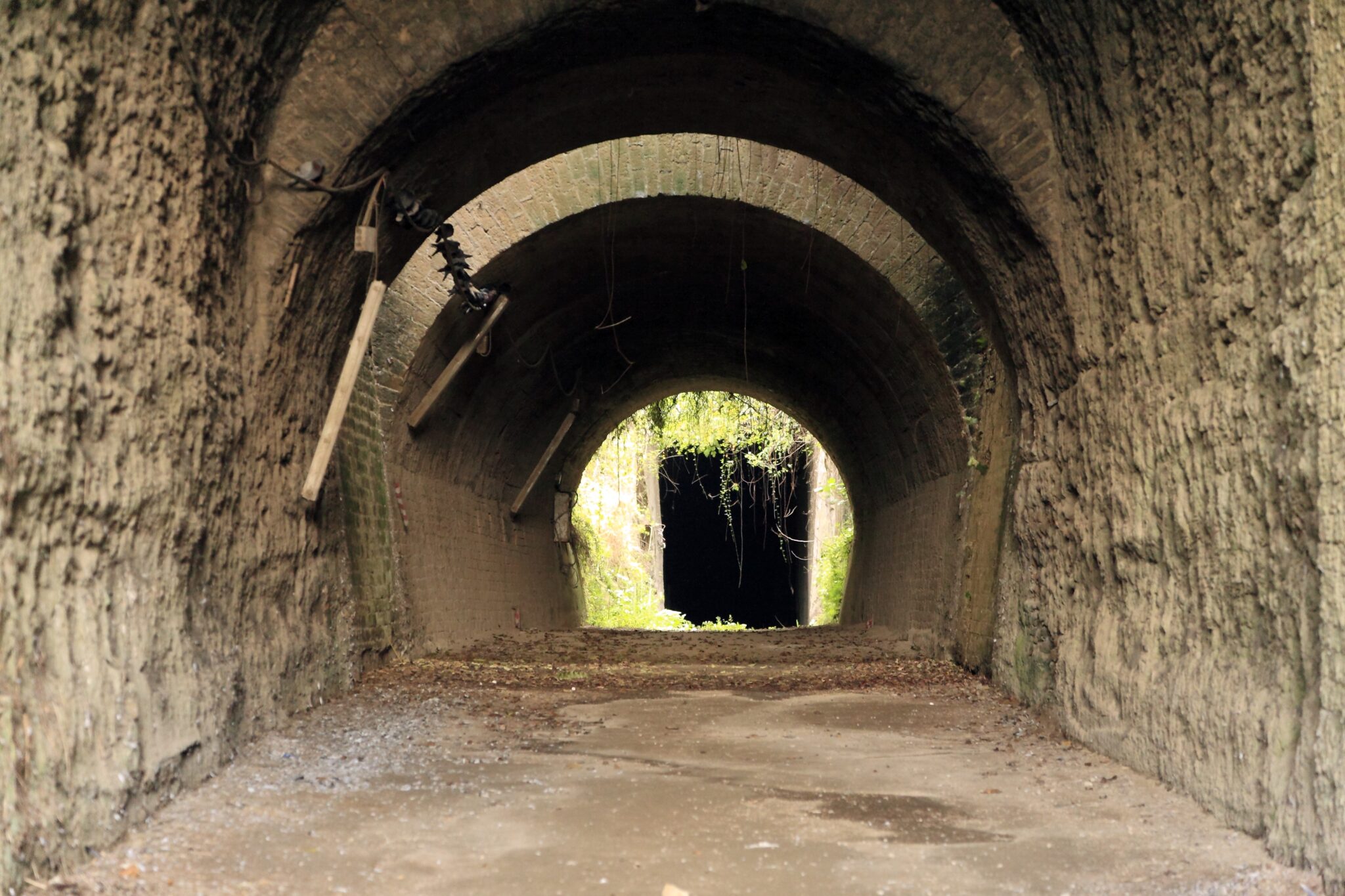
A Roman military tunnel that connected Cumae to Lake Avernus. An engineering masterpiece from the Augustan era (currently undergoing restoration prior to reopening).
The Cocceius Cave is a Roman military tunnel dug entirely out of tuff, which connected the city of Cumae to Lake Avernus. Designed by the architect Lucius Cocceius Aucto on Agrippa's orders in 37 BC, the tunnel was part of a gigantic military infrastructure project intended to create Portus Julius, a secure naval base for Octavian's fleet during the civil wars against Sextus Pompeius. The tunnel is almost a kilometer long and wide enough to accommodate two chariots in opposite directions.
The engineering mastery is particularly evident in the lighting and ventilation system: numerous inclined shafts were dug along the tunnel's length, bringing natural light and fresh air into the depths of the hill. During World War II, the cave was used as an explosives depot, and an accidental explosion damaged part of the vault, making it inaccessible for decades. Recently restored, the Cocceio Cave is one of the most fascinating monuments of ancient military engineering. Walking through it (safety permitting) is like traveling back in time: the absolute silence, the smell of damp tuff, and the geometric perfection of the excavation convey all the determination and technical power of the Roman army of the Augustan era.